|
Treatment of Cerebral Palsy: Music Therapy
|
|
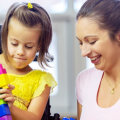
Music Therapy is the skillful use of music as a therapeutic tool to restore, maintain, and improve mental, physical, and emotional health. Specific long-term objectives are set for each child or adult. The procedures used to reach these goals and objectives are accomplished through musical activities such as singing, playing instruments, moving to music, improvising, composing and listening. Singing helps to improve speech and language skills: vocalization, verbalization, articulation, language expression and reception, rhythm, and breath control. Playing instruments improves gross and fine motor skills: coordination, balance, dexterity, range of motion, strength, as well as social skills - participation, self-esteem, and cooperation. Rhythmic movement facilitates gross motor skills: mobility, agility, balance, coordination, as well as respiration patterns and muscular relaxation. Because music is reinforcing, it can be used to motivate movements or structure exercises which are prescribed in physical rehabilitation. Involvement in music may provide a distraction from the pain discomfort, and anxiety often associated with some physical disabilities. Musical experiences presented within a music therapy sessions can be effective in achieving a variety of physical, emotional and social goals relevant to the individuals needs capabilities and preferences. When a child with CP is going to school, being mainstreamed if that is possible, they will be assessed and an Individual Education Plan (IEP) will be developed for them. If it is decided that the student would benefit from music therapy, the therapy is designed to reinforce and strengthen skills identified on the student’s (IEP) and address areas such as receptive language, expressive language, socialization, and motor development. There are many reasons why music therapy is a successful treatment for children. The following are examples of how it works:
Music therapy sessions incorporate the use of different musical media to achieve individualized treatment goals. Through movement to music, movements may become more controlled, fluid and purposeful. Recorded or live background music may be used. Live music offers increased flexibility and adaptability to match and guide physical movements elicited by the client. Musical instruments may be used to work on range of motion, handgrasp strength, and non-verbal self-expression. These instruments are often adapted to fit the specific physical capabilities of each client. The use of computer-aided and electronic musical equipment also allows severely physically disabled clients to reach their fullest creative potential. The act of singing may assist in the maintenance and improvement of oral motor skills and pulmonary functioning. Singing provides opportunities to improve breath-control, rate of speech, articulation and pronunciation skills. For some clients, listening to music may facilitate relaxation. Discussion of lyrics and songwriting may provide opportunities to discuss and share personal thoughts and experiences. Music therapy can increase an individual's level of independence, and enhance feelings of self-confidence, self-worth and self-esteem. Through participation in successful and enjoyable experiences, music therapy can assist these individuals in reaching their fullest potential. Music therapy can be an avenue for increased opportunity to develp social skills in a non-threatening way. Persons with physical disabilities may encounter decreased opportunities and motivation for social interaction. Music therapy can provide opportunities to interact with peers through a shared experience. Group ensembles provide opportunities to develop peer relationships, develop social interaction skills and provide opportunities for cooperation and working together as a group toward a common goal. Group music therapy sessions can also provide opportunities to share personal experiences with others and provide a means and an outlet for appropriate self-expression. Most insurance companies do not cover music therapy so many families must pay for it privately. It also can be covered by schools as a related service under the Individuals with Disabilities Education Act. Some hospitals and clinics may also offer music therapy. You needn’t wait until you meet a specialist in this area to give your child experience in dance and music. To play music for the child to listen to, all you need is a tape or CD player. Vary the music selection you choose from classical to pop, nursery rhymes to reggae. Anything and everything you can find (that’s suitable for a child) will help you child’s development. Alternatively, playing music, as oppose to simply listening, can be even more beneficial, as they learn when their rhythm is out of sync, as one can plainly hear an offbeat drum. Playing the instruments with you child will not only give him or her a guide for how to play them, but will also supply you and your child with valuable time that will be therapeutic for both of you. Don’t run to the store and buy violins and bass guitars, however. Simple homemade instruments, such as a bottle filled with dried beans or rice or some pots and pans and wooden spoons will do the job just fine. If you feel compelled, however, feel free to get your child more advanced percussive instruments, such as maracas, tambourines and drums. Whichever way you go about it, providing your child with instruments and time (preferably with you) to play them can help your child’s development in a big way. Home | Cerebral Palsy Causes | Cerebral Palsy Forms | Cerebral Palsy Conditions Home | Counseling | Music Therapy | Occupational Therapy | Physical Therapy |
||||||||||||||||
|
Please feel free to |
||||||||||||||||
|
|
||||||||||||||||
|
|
||||||||||||||||
|
Physical Therapy, Pharmeceuticals, Play Therapy, Speech Therapy and Surgery. |